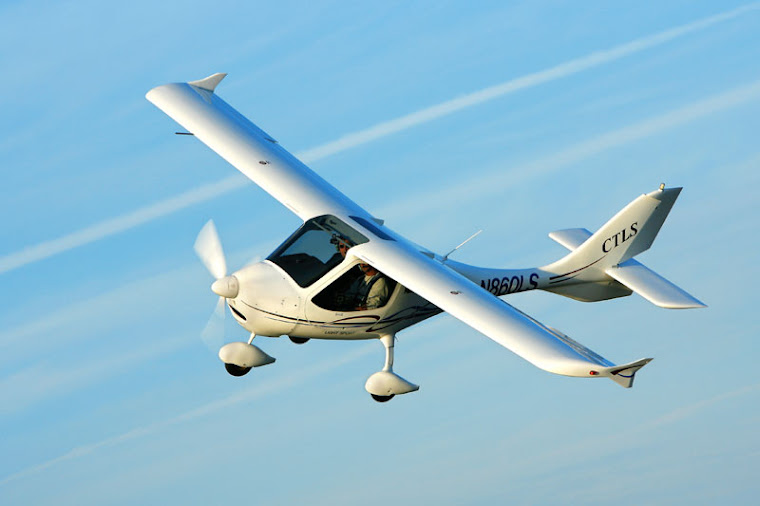
With the advent of the Sport Pilot certificate and the variety of new light sport aircraft (LSA) on the market today, recreational flying is once again possible for the broader population. The Sport Pilot certificate and LSA product line can undeniably move us forward to making GA and recreational sport flying available to the “common” man, but the following changes and attitudes must first take place:
• We must not write-off the “common” man from being able to afford to fly – and refuse to accept the idea that GA flying is for the wealthy only.
• LSA manufacturers must continue to work harder to drive down unit cost of aircraft for ownership to be achievable.
• We must get more creative with shared ownership and financing models - so that the overall aircraft acquisition cost for the “common” man is driven down to relative terms.
• Sport Pilots must move to smaller, privately-owned airports/airparks to facilitate and advance recreational sport flying.
• We must encourage the development of non-residential recreational sport flying airports/airparks – and ultimately see the development and growth of a recreational sport flying infrastructure and network throughout the U.S.
• We must proactively reach out to age-ready high school students through aviation education and youth outreach programs, promoting the benefits of aviation and the classroom-to-real world connections (science, technology, mathematics, etc) to school districts.
• We must see the creation of Safe-Haven Networks to promote the purest and most simplest form of recreational flying, removing the stresses and complexities associated with heavy traffic and ATC communications.
These changes and attitudes must take place now in order to reach the broader population, revive general aviation, and make the dream of flying achievable again!


Saturday, January 23, 2010


Friday, January 15, 2010
What in the World is a Safe-Haven Sport Flying Network?
Working within the confines of the current airspace rules and regulations established by the FAA, the purpose of Safe-Haven Sport Flying Networks is to map-out and delineate recreational playgrounds in the sky for recreational sport pilots to safely fly within. In other words, develop pre-defined safe-haven networks in the sky that overlay networks of complementary airfields on the ground. The network of airfields would include selected towered and non-towered public/private airports, backcountry airstrips and desert/mountain airfields. The objective is to make it easier for sport pilots to fully engage in recreational sport flying - steering clear of busy airports and commercial and business aviation corridors while being able to experience and enjoy a variety of flying environments. Thus, each network must exist in less congested and less restricted airspace and regions. The primary objective is to encourage recreational sport flying without the stresses and complexities associated with heavy traffic and ATC requirements. This makes for an ideal environment for those learning to fly and/or wanting to build proficiency, as well as for those simply wanting to enjoy the purest and most simplest form of recreational piloting and adventure.
Youth Outreach Program - Volunteer Plus Adoption Model
I advocate a youth outreach program specifically targeting high school students ages 15 to 18 – in order to address this extremely important youth segment head-on! In other words, rather than wait for our youth to come to aviation, take aviation directly to them within the broader public school system – but with more intentionality and focus on "age-ready" students who can legally obtain a pilot’s license. I believe parents would be more agreeable to this, too. Develop their passion for aviation and flying by first encouraging them to start a high school flying club and, secondly, by getting them plugged into a local/regional private recreational sport flying airport/airpark network and cultivating their enthusiasm and proficiency through recreational sport aviation. Plant the seed within a more affordable and achievable flying environment and see where it grows from there.
So, what does this youth outreach program look like? It's very simple. Rather than relying solely upon providing aviation-related educational resources to existing teachers, who may or may not be active pilots or enthusiasts, you need to shift the responsibility and focus to a "volunteer plus adoption" model. Volunteer resources can run the gamut of – local Sport Pilot flight school staff, EAA Chapter members, AOPA members, Civil Air Patrol (CAP) adult members, retired airline/military/corporate pilots or other general aviation enthusiasts/experts. Volunteers must be coupled with a 3-tier adoption model as follows:
The first tier is Adopt-a-District. Promote youth outreach to one or more unified school districts in targeted counties of one's state – and promote the educational benefits of learning to fly. Show the correlation of how science, technology, engineering and mathematics (STEM) work in harmony in the real world of flying. The objective is to use real world application to foster understanding and stimulate enthusiasm, including the residual benefits of developing other important life skills such as good communication and teamwork, listening and comprehension.
The second tier is Adopt-a-Teacher. The idea behind this tier is to partner with teachers who are ideally aviation enthusiasts and/or active pilots who can help keep the outreach program active and anchored within their respective high schools. The objective here is to bring in volunteers along side teachers to co-teach all introductory ground school courses – oriented specifically to fundamental airmanship (aviate, navigate & communicate) and recreational sport flying. This may be done as an after-school enrichment program or in-school elective class.
The third and final tier is Adopt-a-Club. The idea behind this tier is to develop flying clubs and get high school students plugged into them, encouraging participation through regular meetings at school and weekend gatherings at the nearest local/regional private recreational sport flying airport/airpark. The goal of these clubs is to sustain interest and strengthen a passion for flying. The teachers and volunteers can help facilitate all flying club activities.
The great thing about getting EAA or AOPA members and/or retired airline/military/corporate pilots involved in youth/high school outreach is that they represent the baby boomers who should be very excited about this program – having an opportunity to share their enthusiasm and experiences and give back to the community. The youth outreach program is a very proactive means for getting youth hooked on flying across the broader public school system. The ultimate objective of the youth outreach program is to encourage age-ready high school students to take the next step and attain their Sport Pilot certificate at their nearest local/regional private recreational sport flying airport or airpark.
In conclusion, the youth outreach program closes the gap to achievability, and helps prime-the-pump to bigger and better ambitions. Without it, the future of our pilot population looks dim!
So, what does this youth outreach program look like? It's very simple. Rather than relying solely upon providing aviation-related educational resources to existing teachers, who may or may not be active pilots or enthusiasts, you need to shift the responsibility and focus to a "volunteer plus adoption" model. Volunteer resources can run the gamut of – local Sport Pilot flight school staff, EAA Chapter members, AOPA members, Civil Air Patrol (CAP) adult members, retired airline/military/corporate pilots or other general aviation enthusiasts/experts. Volunteers must be coupled with a 3-tier adoption model as follows:
The first tier is Adopt-a-District. Promote youth outreach to one or more unified school districts in targeted counties of one's state – and promote the educational benefits of learning to fly. Show the correlation of how science, technology, engineering and mathematics (STEM) work in harmony in the real world of flying. The objective is to use real world application to foster understanding and stimulate enthusiasm, including the residual benefits of developing other important life skills such as good communication and teamwork, listening and comprehension.
The second tier is Adopt-a-Teacher. The idea behind this tier is to partner with teachers who are ideally aviation enthusiasts and/or active pilots who can help keep the outreach program active and anchored within their respective high schools. The objective here is to bring in volunteers along side teachers to co-teach all introductory ground school courses – oriented specifically to fundamental airmanship (aviate, navigate & communicate) and recreational sport flying. This may be done as an after-school enrichment program or in-school elective class.
The third and final tier is Adopt-a-Club. The idea behind this tier is to develop flying clubs and get high school students plugged into them, encouraging participation through regular meetings at school and weekend gatherings at the nearest local/regional private recreational sport flying airport/airpark. The goal of these clubs is to sustain interest and strengthen a passion for flying. The teachers and volunteers can help facilitate all flying club activities.
The great thing about getting EAA or AOPA members and/or retired airline/military/corporate pilots involved in youth/high school outreach is that they represent the baby boomers who should be very excited about this program – having an opportunity to share their enthusiasm and experiences and give back to the community. The youth outreach program is a very proactive means for getting youth hooked on flying across the broader public school system. The ultimate objective of the youth outreach program is to encourage age-ready high school students to take the next step and attain their Sport Pilot certificate at their nearest local/regional private recreational sport flying airport or airpark.
In conclusion, the youth outreach program closes the gap to achievability, and helps prime-the-pump to bigger and better ambitions. Without it, the future of our pilot population looks dim!
Shared Aircraft Ownership – the "New Normal"
According to the Aircraft Partnership Association (APA), the primary constraint on all recreational-use vehicles is – available time!
Since the majority of powersports (aka motorsports) buyers are wage-earners and small business owners (still working and earning a living), recreational enjoyment is usually constrained to evenings, weekends, holidays and vacations. Due to these constraints, and other variables like weather, the average annual hours of recreational vehicle usage – which includes traditional powersports vehicles such as ATVs, snowmobiles, fishing boats, RVs, etc. – ranges from 50 to 100 hours per year. Thus, powersports equipment is typically under-utilized by its sole owner.
The APA concluded that personal aircraft mean ownership and operating costs are surprisingly similar to powersports vehicles. The APA calculated that median powersports vehicle usage costs range from between $50 to $150 per hour – about the same range as that of many single-engine piston personal aircraft. In addition, aircraft enjoy a much longer operational life than other types of powersports vehicles – and retain value for decades! This much slower depreciation makes shared ownership of personal aircraft extremely compelling to the broader powersports market – as it offers the unique opportunity for selling 3 to 5 years down the road – and buying newer or pocketing the proceeds. This same benefit is typically not available to other traditional powersports vehicles due to generally steep depreciation experiences. Therefore, shared ownership of personal aircraft is highly compelling and achievable, especially when personal aircraft are used for recreation or training purposes. Likewise, according to the APA, scheduling conflicts, usually a concern for most aircraft partnerships, are rare or easily manageable in most shared arrangements where recreational usage is characteristically lower.
According to the APA, the most common misconception of the recreational powersports buyer is that personal aircraft used for recreational aviation (i.e. recreational sport flying) are much more expensive to own and operate than traditional recreational powersports equipment. However, the APA dispels this notion by concluding that the hourly costs or rates are actually comparable as long as unit price or acquisition cost is shared.
Therefore, sole ownership of a personal aircraft is truly not prudent in the world of recreational sport flying or recreational aviation. However, shared ownership is very practical and prudent – and also vital to penetrating the larger powersports market. The APA strongly believes that the more quickly the current GA community refines the means for shared ownership, the sooner will we see increased sales to the untapped recreational powersports market and perhaps a revival in general aviation.
In its conclusion, the APA strongly believes that the GA community has a harsh choice to make at this juncture – either sell shared aircraft ownership to the powersports market to increase sales or learn to be content with a shrinking and aging single-engine personal aircraft market.
It’s time to think outside the box and fully embrace shared aircraft ownership as the “new normal” in order to revitalize recreational general aviation in the US. Shared aircraft ownership makes recreational sport flying as affordable as most traditional powersports pursuits, and also opens the door to a $44+ billion broader market. It’s a win-win for all!
Since the majority of powersports (aka motorsports) buyers are wage-earners and small business owners (still working and earning a living), recreational enjoyment is usually constrained to evenings, weekends, holidays and vacations. Due to these constraints, and other variables like weather, the average annual hours of recreational vehicle usage – which includes traditional powersports vehicles such as ATVs, snowmobiles, fishing boats, RVs, etc. – ranges from 50 to 100 hours per year. Thus, powersports equipment is typically under-utilized by its sole owner.
The APA concluded that personal aircraft mean ownership and operating costs are surprisingly similar to powersports vehicles. The APA calculated that median powersports vehicle usage costs range from between $50 to $150 per hour – about the same range as that of many single-engine piston personal aircraft. In addition, aircraft enjoy a much longer operational life than other types of powersports vehicles – and retain value for decades! This much slower depreciation makes shared ownership of personal aircraft extremely compelling to the broader powersports market – as it offers the unique opportunity for selling 3 to 5 years down the road – and buying newer or pocketing the proceeds. This same benefit is typically not available to other traditional powersports vehicles due to generally steep depreciation experiences. Therefore, shared ownership of personal aircraft is highly compelling and achievable, especially when personal aircraft are used for recreation or training purposes. Likewise, according to the APA, scheduling conflicts, usually a concern for most aircraft partnerships, are rare or easily manageable in most shared arrangements where recreational usage is characteristically lower.
According to the APA, the most common misconception of the recreational powersports buyer is that personal aircraft used for recreational aviation (i.e. recreational sport flying) are much more expensive to own and operate than traditional recreational powersports equipment. However, the APA dispels this notion by concluding that the hourly costs or rates are actually comparable as long as unit price or acquisition cost is shared.
Therefore, sole ownership of a personal aircraft is truly not prudent in the world of recreational sport flying or recreational aviation. However, shared ownership is very practical and prudent – and also vital to penetrating the larger powersports market. The APA strongly believes that the more quickly the current GA community refines the means for shared ownership, the sooner will we see increased sales to the untapped recreational powersports market and perhaps a revival in general aviation.
In its conclusion, the APA strongly believes that the GA community has a harsh choice to make at this juncture – either sell shared aircraft ownership to the powersports market to increase sales or learn to be content with a shrinking and aging single-engine personal aircraft market.
It’s time to think outside the box and fully embrace shared aircraft ownership as the “new normal” in order to revitalize recreational general aviation in the US. Shared aircraft ownership makes recreational sport flying as affordable as most traditional powersports pursuits, and also opens the door to a $44+ billion broader market. It’s a win-win for all!
Thursday, January 14, 2010
Private Recreational Sport Flying Airports/Airparks - a Paradigm Shift
In an earlier blog, I said that we needed to see sport pilots move away from the burdensome restrictions of public airports and head to smaller privately-held airports/airparks to facilitate and advance recreational sport flying. And that we need to encourage the development and promotion of non-residential, privately-held LSA recreational sport flying airports/airparks emphasizing exclusive recreational use – and ultimately build a recreational sport flying airport/airpark infrastructure and network throughout the U.S.
 With that said, I propose that each private airport/airpark consist of a host of specific departments in order to optimize the recreational sport flying experience. The idea is to build a replicable system not unlike a franchise model. Each private airport/airpark should foster a strong sense of community among recreational sport flying enthusiasts and aviators alike. The airpark should be a place where like-minded aviators can hang-out on a regular basis – a home away from home, a safe harbor for youth, and a place of passion, spirit and adventure – a catalyst for a general aviation revival!
The concept includes several key departments - currently referred to as zones. Each zone working together in concert results in an optimal sport aviation experience - the zones are the following:
The Community-zone is the cornerstone of each airport/airpark, the central meeting place where aviators congregate and meet to break bread, share stories, laugh and build relationships and community – better known as the pilot’s lounge.
The Entertainment-zone is primarily for youth and visitors. Its purpose is to promote flying through rich multi-media presentations filled with compelling aviation and flight videos – using visual and audible means to stir emotion and stimulate excitement over flying.
The Imagine-zone is essentially a bone yard display filled with selected aircraft – from single-engine GA airplanes to commercial and military airplanes – including cockpit cross-section displays. It is primarily for youth and visitors to have an opportunity to touch and feel real aircraft – sit in cockpits and tinker with authentic flight controls and instrumentation – daydream – and imagine being a pilot!
The Simulator-zone is a place dedicated to flight simulation introductions, training and arcades/games. Other training may include VFR communications and “thumb-on-the-map” navigation. This is a place where sport pilots can hone their skills using a simulated environment. It’s also a place where youth and visitors can have fun with the latest arcades/games, and get a taste for the thrill and exhilaration of flying in a virtual environment.
The Training-zone is for sport pilot ground school training and flight instruction. It also includes refresher training and other brief topical seminars and educational programs for sport fliers.
The Flight-zone includes the flight line, aircraft rentals, fuel services and active runway. Each airport/airpark will have a special Unicom-like frequency so pilots can report all movement within 5 miles of the active runway. The airport/airpark owner may elect to offer one type of S-LSA product for rental in order to leverage same-aircraft economies related to maintenance/operational costs. Both Avgas and unleaded automobile gasoline would be available to pilots as well.
The Maintenance-zone is an area dedicated to aircraft owners who need to perform minor maintenance or repair work while at the airport/airpark. This is a do-it-yourself model offering basic tools and equipment for use on a first-come, first-served basis - including an onsite mechanic to assist with minor engine repairs (i.e. Rotax, etc). This area would comprise a hangar-like station where aircraft can easily flow in-and-out – and quickly get back to the Flight-zone.
The Build-zone is primarily a location for the avid builder of experimental light sport aircraft and advanced ultralights to gather and share ideas/experiences. This area would also have related educational projects (i.e. Build-a-Plane program) for high school youth who are interested in the design and engineering of personal aircraft.
The Career-zone is primarily for youth to learn more about the various professional career opportunities in aviation as a whole. Different aviation representatives or entities would be invited to talk to youth about careers in commercial, corporate and military flying – and more.
The Club-zone is dedicated to local/regional high school flying clubs. It serves as an extension to high school youth outreach programs whereby students have the opportunity to hangout at their local/regional airport/airpark on the weekend and/or holiday, become a part of the culture, receive flight training, build proficiency, and develop strong character. It’s the bridge from classroom-to-cockpit.
The Volunteer-zone is dedicated to facilitating and managing volunteers such as retired airline and military pilots who desire to offer their time to help mentor youth and assist other sport pilots at the airport/airpark. Volunteers may also include local/regional EAA Chapter members who desire to promote the EAA Young Eagles Flight Program, facilitate youth flying clubs, and help out where needed. Volunteers will be instrumental in helping run selected zones and optimizing the recreational sport flying experience.
The Demo-zone is dedicated to having LSA vendors come to the airport/airpark to demonstrate and promote their products. This includes S-LSA, E-LSA and advanced ultralight aircraft manufacturers. They would have the opportunity to do both static and flight demonstrations to a very captive audience. This venue offers a very grassroots approach to addressing the appropriate target market.
The Ownership-zone is dedicated to offering shared ownership options to sport pilots serious about their flying. Its intent is to offer sport pilots the opportunity to afford ownership and fulfill their passion for flying. The beauty of the private airport/airpark structure is that it allows pilots to first build relationships with fellow aviators and then later decide who best to partner with in an aircraft.
The Trailer-zone is simply what it says – it’s an area where pilots of foldable-wing aircraft can park and unload their aircraft at the airport/airpark. It facilitates portability and storage flexibility for sport pilots/owners.
The Camp-zone makes it possible for sport pilots to stay over night, have an option of RV or tent camping, and enjoy a fun-filled weekend (or longer) of recreational sport flying – not unlike enthusiasts who camp over the weekend to enjoy off-road and boating recreation as well as other powersports pursuits.
 Adopting the structure described above requires a paradigm shift in thinking. If we are to see growth in the Sport Pilot and LSA market, then we need to provide recreational playgrounds for sport pilot enthusiasts to fulfill their dream of flying – and we need to move away from the public airport system as there are too many growing challenges and restrictions that will continue to hamper recreational sport flying. As an aside, this model also encourages entrepreneurship - as it provides a means for business-minded aviators to start small “for profit” businesses around their passion for aviation - deriving revenue from affordable daily landing/usage fees, tie-down fees, Sport Pilot training and flight instruction fees, LSA rental fees, aircraft sales, fuel sales, campground fees, etc.
Friday, January 8, 2010
Public Airports vs. Private Airports/Airparks
 I strongly believe we need to see sport pilots move away from the burdensome restrictions of public airports and head to smaller privately-owned airports/airparks to facilitate and advance recreational sport flying. Build it and they will come! Okay, yes, marketing is important too! We need to encourage the development and promotion of non-residential, privately-owned LSA recreational sport flying airports/airparks emphasizing exclusive recreational use – and ultimately build a recreational sport flying airport/airpark infrastructure and network throughout the U.S.
Let the owners and pilots of conventional single-engine piston aircraft deal with the challenges and headaches associated with busy public airports and constant business demands and traffic congestion. Let the owners and pilots of S-LSA and E-LSA, including advanced ultralights, move to private airports/airparks away from these hassles. Consider for a moment that most urban public airports can be intimidating to those seeking to learn to fly. Recreational sport flying airports/airparks would be much more pilot-friendly, and offer less complexity. In addition, measures would need to be taken to encourage private airport/airpark development such as tax incentives and/or government subsidies.
Private recreational sport flying airports/airparks should ideally comprise both land and water locations, as well as exist in more remote (suburban or rural) regions away from densely populated areas – not unlike most motorsports (powersports) locations, such as off-road and boating or personal watercraft recreational playgrounds. Don’t forget – people drive to remote or distant locations to go skiing, camping, fishing, boating, four-wheeling and more – why not flying?
In fact, I strongly believe that under-utilized or abandoned private airstrips (airports/airparks) offer upside potential in helping to facilitate this movement – as these airstrips already exist and probably include enough acreage for improvements/expansion – and I'd bet that property owners would embrace the prospect of injecting new life into abandoned, rundown facilities. In fact, the promise of long-term lease revenue and leasehold improvements alone could be incentive enough! These private-use airstrips (ideally situated in remote locations) could potentially be transformed into bustling recreational sport flying airports/airparks (recreational playgrounds or centers) across the country.
Some of the benefits of moving sport pilots and their light sport aircraft from public airports to private airports/airparks are:
• Eliminates issues inherent to public airports – i.e. community growth/encroachment, public ignorance, safety, security, noise abatement, and ultimately pressure to shut down
• Relieves traffic stress on busy public airports
• Facilitates and optimizes a new environment focused entirely on recreational sport flying
• Fosters a strong community of like-minded sport flying aviators/powersports enthusiasts
• Ensures legal landings, safe traffic flow and overall operational safety
Additionally, recreational sport flying airports/airparks are ideal for youth outreach, educational programs/seminars, flight training, aircraft rentals, flying clubs and more – focused exclusively on the Sport Pilot and LSA market!
Tuesday, December 15, 2009
GAMA-FAA Stats Look Promising for Sport Pilot and LSA Market
After reviewing and analyzing the latest GAMA-FAA forecasts and historical data (public information - see General Aviation Manufacturers Association website at http://www.gama.aero/), it is evident that specific trends are emerging in the Sport Pilot and LSA market segment. The following is a breakdown of key points:
• The number of active U.S. Sport Pilot certificates held from 2005 to 2008 has grown from a mere 134 to 2,623 respectively.
• The number of estimated FAA active Sport Pilot certificates held in 2008 shows that the majority of sport pilots fall between the ages of 45 and 60 – with the average age being 53.
• The FAA forecast – for U.S. General Aviation and On-Demand FAR 135 Aircraft – shows the LSA average annual growth rate through 2025 at 9.9% – the next largest growth rate is for Turbo Jet aircraft at 5.6%. LSA has the largest forecasted average annual growth rate out of all categories through 2025 – in contrast, the conventional single-engine piston rate is a mere 0.5%.
• The FAA forecast – for U.S. General Aviation and On-Demand FAR 135 Aircraft Hours Flown – shows the LSA average annual growth rate through 2025 at 12.1% – the next largest growth rate is for Turbo Jet aircraft at 7.7%. LSA has the largest forecasted average annual growth rate out of all categories through 2025 – in contrast, the conventional single-engine piston rate is a mere 1.0%.
• The FAA forecast – for U.S. Pilot Population – shows the Sport Pilot average annual growth rate through 2025 at 13.7% – the next largest growth rate is for Rotorcraft pilot at 2.1%. This reflects a significant gap between Sport Pilot and all other pilot categories through 2025 – in contrast, the private pilot rate is a mere 0.2%.
I believe the data reflects a very positive future for the Sport Pilot and LSA market. As the economy slowly turns around from a deep recession and we begin to see GDP reaching 3% or more over the next couple of years, Sport Pilot and LSA opportunity and growth will start to abound, according to GAMA-FAA 2008 stats.
• The number of active U.S. Sport Pilot certificates held from 2005 to 2008 has grown from a mere 134 to 2,623 respectively.
• The number of estimated FAA active Sport Pilot certificates held in 2008 shows that the majority of sport pilots fall between the ages of 45 and 60 – with the average age being 53.
• The FAA forecast – for U.S. General Aviation and On-Demand FAR 135 Aircraft – shows the LSA average annual growth rate through 2025 at 9.9% – the next largest growth rate is for Turbo Jet aircraft at 5.6%. LSA has the largest forecasted average annual growth rate out of all categories through 2025 – in contrast, the conventional single-engine piston rate is a mere 0.5%.
• The FAA forecast – for U.S. General Aviation and On-Demand FAR 135 Aircraft Hours Flown – shows the LSA average annual growth rate through 2025 at 12.1% – the next largest growth rate is for Turbo Jet aircraft at 7.7%. LSA has the largest forecasted average annual growth rate out of all categories through 2025 – in contrast, the conventional single-engine piston rate is a mere 1.0%.
• The FAA forecast – for U.S. Pilot Population – shows the Sport Pilot average annual growth rate through 2025 at 13.7% – the next largest growth rate is for Rotorcraft pilot at 2.1%. This reflects a significant gap between Sport Pilot and all other pilot categories through 2025 – in contrast, the private pilot rate is a mere 0.2%.
I believe the data reflects a very positive future for the Sport Pilot and LSA market. As the economy slowly turns around from a deep recession and we begin to see GDP reaching 3% or more over the next couple of years, Sport Pilot and LSA opportunity and growth will start to abound, according to GAMA-FAA 2008 stats.
GA Flying for the Broader Population is Absolutely Achievable Through the Sport Pilot Certificate and LSA Offering
Conventional single-engine piston aircraft and light sport aircraft (LSA) are two distinct markets addressing two different needs in general aviation today. The conventional single-engine piston market targets “monied” people – while the LSA market targets “common” people or broader population. We must refuse to accept the idea that general aviation (GA) flying is for the wealthy only. GA flying for the broader population is absolutely achievable through the Sport Pilot certificate and LSA offering.
Yes, the wealthy (or “monied” people) certainly can afford a private pilot’s license (or other advanced rating for that matter) – let alone a conventional single-engine piston aircraft like a Cessna 350, Cirrus SR22 or Diamond DA50 – thoroughly embracing GA flying and the unique sense of freedom it brings. And they certainly can afford to buy luxury cars and live in expensive homes, too. We welcome their contribution to consumerism! And it’s probably fair to say they comprise the likes of successful industry leaders, business owners, celebrities and other "monied" people. However, the assumption is that this market uses GA aircraft primarily for transportation rather than recreation – visiting clients, attending important meetings or events, operating multiple business locations, and more – facilitating business-related uses. They buy their aircraft based on a desire for flying and, ultimately, business demands. Therefore, primary use is business-related vs. pleasure-related. Pleasure use is likely secondary – vacationing, weekend getaways, etc. – but not necessarily recreational in the truest sense. Again, this market is ideally suited for conventional single-engine piston aircraft.


The “common” people (or broader population) likewise have an equal desire for flying, but typically have limited resources to enjoy the thrill, exhilaration and freedom of flying. The assumption here is that this market uses GA aircraft primarily for recreational use rather than transportation. Therefore, primary use is pleasure-related vs. business-related. Today, we call this non-conventional flying vs. the yesteryears of common barnstorming and grassroots sport flying. Flight plans are usually not required, and cross-country trips are characteristically rare. In fact, flying under the radar might be considered the norm. Sport pilots go fly, land, and do it all over again – enjoying the purest and most simplest form of recreational fun and adventure – for example:
• Flying around the ranch, lake, ocean, airpark or airport
• Flying airport-to-airport for a bite to eat
• Flying to a remote landing spot and enjoying an afternoon picnic
• Shooting landings (both on land and in water)
• Taking in the sights or flying in formation
• Exploring remote locations or geography and satisfying the adventurer spirit
• Doing fly-ins (i.e. camping, fishing, hiking, etc)
• Engaging in short “air rover” flights for fun – while at the same time maintaining proficiency
So, business use is not a factor, and transportation use is likely secondary – such as occasional visits to see friends or family – but limited by payload, fuel costs and other fees. Furthermore, LSA product does not necessarily require sophistication - especially since night flying, instrument flying, and long cross-country flying are either prohibited or limited in scope. So, this market is ideally suited for the Sport Pilot certificate and LSA product offering.


When you look at GAMA-FAA stats, its evident that there is a huge latent demand for the Sport Pilot and LSA market. Based on historical data regarding the average age of those currently holding a sport pilot certificate in the U.S., it’s clear that the middle-aged baby-boomer is the most active group. And I bet you’d find the majority of members in EAA chapters comprising this group, too. And yes, there are numerous factors contributing to this trend such as latent desire, disposable income, more available time, etc. This age group, who probably got hooked on flying when younger, most likely got side-lined with life, and had no other choice but to put the "dream" on hold. Perhaps even obtained a private pilot’s license and aspired to be a professional pilot – but inevitably had to suppress the dream due to work, family, lack of disposable income, and other constraints. However, today this group finally has the means to afford to fulfill that suppressed passion through the Sport Pilot and LSA offering, and are starting to pursue that life-long dream again!
Again, the middle-aged baby-boomer segment is a huge market – ranging in age from 45 to 60. They are not “monied” people, but rather “common” people with discretionary income – wage earners and small business owners desiring to learn to fly and fulfill their passion for aviation at mid-life. This segment comprises both net-new aviators who were unable to obtain a private pilot’s license when they were younger, and active/inactive aviators such as:
• Inactive, retired professional pilots (i.e. military, commercial, corporate, etc) – who still need a flying fix!
• Inactive, frustrated GA pilots – who desire re-currency but have been sidelined by life distractions and high costs for years
• Active, high-end, advanced ultralight converts
• Active, low-end, private pilot converts – who focus on recreational sport flying and want to minimize overall operating costs due to budget constraints
• Active, advanced computer pilot converts
Another huge and untapped market is the youth segment ranging in age from 16 to 29. Based on GAMA-FAA stats, this group represents the largest group of student pilots among all age groups. In fact, the number of student pilots falls off dramatically after age 29 – most likely due to affordability issues. This “Generation Y” segment is vital to the future of GA. We need to get this segment hooked on flying, and sticking with it! Growth in this segment will help meet future demand for pilots in GA – such as corporate and charter pilots. Likewise, it will help meet future demand for pilots in other professional roles – such as commercial and military pilots. The key question is – how can we get this “Gen Y” segment excited about GA and flying? Through proactive outreach! More on this in a later blog.
Probably the largest untapped market today exists within the traditional US powersports market which is approximately 60 times the size of the US piston-engine personal aircraft market, according to The Aircraft Partnership Association. According to the APA, in order to penetrate this broader market, it is critical that the average purchase price of light sport aircraft be reduced to a range of $5,000 to $50,000 - as the vast majority of new powersports vehicle purchases typically fall within this price range, the apparent "sweet spot" for sales to this broader market. In other words, the primary barrier to entry (for personal aircraft manufacturers) into the $44+ billion powersports market is the unit price or acquisition cost of aircraft, according to the APA. Unless this barrier is overcome, GA will remain stuck chasing a shrinking and aging market niche. More on this in a later blog.
Yes, the wealthy (or “monied” people) certainly can afford a private pilot’s license (or other advanced rating for that matter) – let alone a conventional single-engine piston aircraft like a Cessna 350, Cirrus SR22 or Diamond DA50 – thoroughly embracing GA flying and the unique sense of freedom it brings. And they certainly can afford to buy luxury cars and live in expensive homes, too. We welcome their contribution to consumerism! And it’s probably fair to say they comprise the likes of successful industry leaders, business owners, celebrities and other "monied" people. However, the assumption is that this market uses GA aircraft primarily for transportation rather than recreation – visiting clients, attending important meetings or events, operating multiple business locations, and more – facilitating business-related uses. They buy their aircraft based on a desire for flying and, ultimately, business demands. Therefore, primary use is business-related vs. pleasure-related. Pleasure use is likely secondary – vacationing, weekend getaways, etc. – but not necessarily recreational in the truest sense. Again, this market is ideally suited for conventional single-engine piston aircraft.


• Flying around the ranch, lake, ocean, airpark or airport
• Flying airport-to-airport for a bite to eat
• Flying to a remote landing spot and enjoying an afternoon picnic
• Shooting landings (both on land and in water)
• Taking in the sights or flying in formation
• Exploring remote locations or geography and satisfying the adventurer spirit
• Doing fly-ins (i.e. camping, fishing, hiking, etc)
• Engaging in short “air rover” flights for fun – while at the same time maintaining proficiency
So, business use is not a factor, and transportation use is likely secondary – such as occasional visits to see friends or family – but limited by payload, fuel costs and other fees. Furthermore, LSA product does not necessarily require sophistication - especially since night flying, instrument flying, and long cross-country flying are either prohibited or limited in scope. So, this market is ideally suited for the Sport Pilot certificate and LSA product offering.


Again, the middle-aged baby-boomer segment is a huge market – ranging in age from 45 to 60. They are not “monied” people, but rather “common” people with discretionary income – wage earners and small business owners desiring to learn to fly and fulfill their passion for aviation at mid-life. This segment comprises both net-new aviators who were unable to obtain a private pilot’s license when they were younger, and active/inactive aviators such as:
• Inactive, retired professional pilots (i.e. military, commercial, corporate, etc) – who still need a flying fix!
• Inactive, frustrated GA pilots – who desire re-currency but have been sidelined by life distractions and high costs for years
• Active, high-end, advanced ultralight converts
• Active, low-end, private pilot converts – who focus on recreational sport flying and want to minimize overall operating costs due to budget constraints
• Active, advanced computer pilot converts
Another huge and untapped market is the youth segment ranging in age from 16 to 29. Based on GAMA-FAA stats, this group represents the largest group of student pilots among all age groups. In fact, the number of student pilots falls off dramatically after age 29 – most likely due to affordability issues. This “Generation Y” segment is vital to the future of GA. We need to get this segment hooked on flying, and sticking with it! Growth in this segment will help meet future demand for pilots in GA – such as corporate and charter pilots. Likewise, it will help meet future demand for pilots in other professional roles – such as commercial and military pilots. The key question is – how can we get this “Gen Y” segment excited about GA and flying? Through proactive outreach! More on this in a later blog.
Probably the largest untapped market today exists within the traditional US powersports market which is approximately 60 times the size of the US piston-engine personal aircraft market, according to The Aircraft Partnership Association. According to the APA, in order to penetrate this broader market, it is critical that the average purchase price of light sport aircraft be reduced to a range of $5,000 to $50,000 - as the vast majority of new powersports vehicle purchases typically fall within this price range, the apparent "sweet spot" for sales to this broader market. In other words, the primary barrier to entry (for personal aircraft manufacturers) into the $44+ billion powersports market is the unit price or acquisition cost of aircraft, according to the APA. Unless this barrier is overcome, GA will remain stuck chasing a shrinking and aging market niche. More on this in a later blog.
Subscribe to:
Posts (Atom)